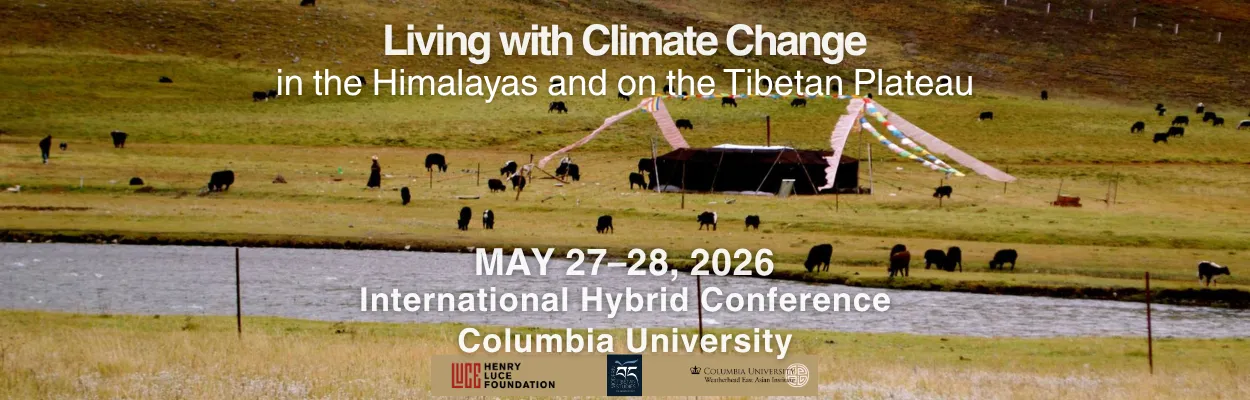
This conference brings together scholars, community leaders, and practitioners from the Himalayas and the Tibetan Plateau to discuss global warming, environmental transformations, community priorities, and the role of Indigenous traditions and creativity in addressing complex and interconnected changes in the Asian Highlands. It marks the culmination of a year-long collaborative project examining the impacts of climate change, climate research, and policies on Himalayan and Tibetan communities across this transnational region. Grounded in centuries-old place-based traditions and knowledge of long-term ecological change, as well as informed by global Indigenous climate scholarship, the project seeks to identify, imagine, and articulate more effective models and visions for responding to climate change and other intersecting challenges affecting these communities and their homelands. In a final session, we will discuss possible conference outcomes, including conference proceedings and other strategies for sharing resources and insights across the region.
Conference Schedule
Tuesday, May 26 (Pre-Conference Film Screening)
Wednesday, May 27: "Ways of Knowing Climate Change." Location: Calder Lounge 107, Uris Hall, 3022 Broadway, NYC
Thursday, May 28: "Ways of Living with Climate Change" Location: Calder Lounge 107, Uris Hall, 3022 Broadway, NYC
Kalzang Dorjee Bhutia is Lhopo scholar from western Sikkim. He is a Senior Fellow at Centre of Excellence for Himalayan Studies, Shiv Nadar Institution of Eminence. He completed his PhD in Buddhist Studies at the University of Delhi. His research on human and more-than-human relationships in the valleys and mountains of Sikkim has been funded by the American Council of Learned Societies, Robert H. N. Ho Foundation, and the Wenner-Gren Foundation.
Dr. Yuria Celidwen is a Nahua and Maya Bats’il K’op author of Flourishing Kin: Indigenous Wisdom for Collective Well-Being (Sounds True, 2024) and a research scientist at UC Berkeley who integrates Indigenous studies, cultural psychology, and contemplative sciences through transdisciplinary approaches to transcendent experiences expressed through prosocial behaviors such as reverence, ethics, compassion, love, and sacredness. Dr. Celidwen developed the “Ethics of Belonging” thesis, which promotes awareness, intentional action, and relational well-being to support planetary flourishing. In her work, she explores personal and cultural narratives that shift identities toward an ethos of meaning and participation rooted in honoring Life.
Dr. Lobzang Chorol is an environmental researcher from Leh, Ladakh, specializing in groundwater quality assessment and environmental health in trans-Himalayan regions. She works as a Young Professional in Climate Change and Sustainable Development under the Project Management Unit, Secretariat, UT Ladakh. Dr. Lobzang Chorol completed her Ph.D. in Environmental Science and Engineering from the Indian Institute of Technology (ISM) Dhanbad in 2024, where her research focused on integrated approaches for groundwater assessment in Ladakh’s high-altitude cold desert ecosystem, combining hydrogeochemical analysis, health risk assessment, and climate impact studies. Her work addresses the impacts of climate change, rapid urbanization, and tourism on fragile water resources, guided by a commitment to protecting Ladakh's fragile ecosystem while supporting development pathways that honor Indigenous knowledge, cultural heritage, and environmental sustainability.
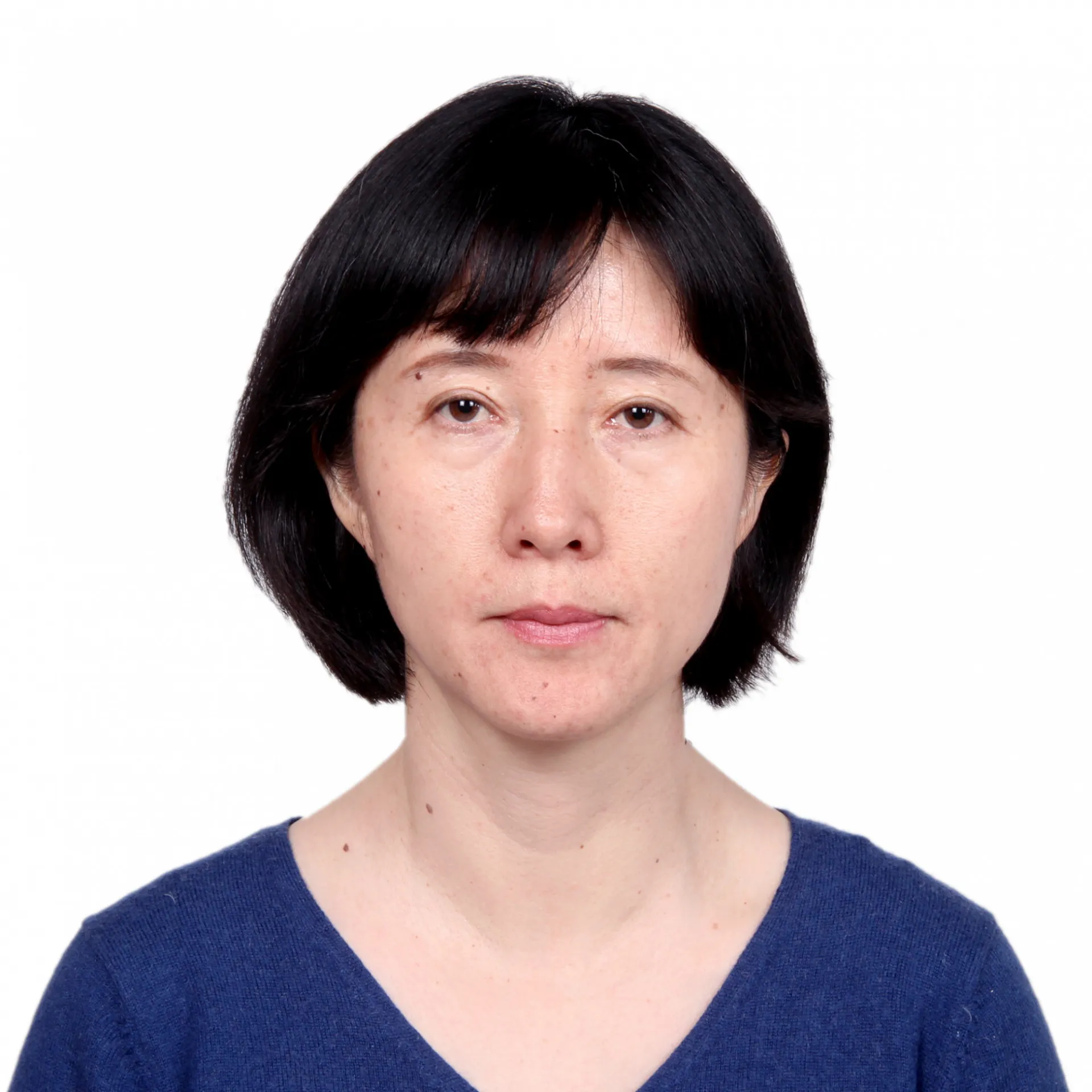
Dr. Lan Cuo served as a professor at the Institute of Tibetan Plateau Research (ITPR), Chinese Academy of Sciences, and as an adjunct professor at the University of the Chinese Academy of Sciences in 2010-2025. She has since been reappointed as a professor at ITPR. She received her Master of Science degree in 1996 from the Nanjing Institute of Meteorology and earned her Ph.D. in 2005 from the University of Hawai‘i at Mānoa. She conducted postdoctoral research at the University of Washington, Seattle, from 2005 to 2009, and joined ITPR in 2010. Her research has focused on surface hydrology and climatology of the Tibetan Plateau. Professor Lan Cuo has published 63 peer-reviewed papers that are widely cited. She was awarded the Excellent Young Scientist Award by the Chinese Tibetan Plateau Research Association in 2015.
Dr. Phurwa Dondrub Dolpopa is an assistant professor of Indigenous environmental studies and sciences at the Department of Geography, University of British Columbia. His research primarily focuses on environmental politics, development, and Indigeneity in the Nepal Himalaya, with particular attention to questions of power, knowledge, and agency. The first component of this work examines the caterpillar fungus and the snow leopard to understand how Himalayan lifeways and traditional institutions of governance are fundamentally altered by and respond to global biodiversity conservation efforts and national state-making projects in Dolpo. The other component involves a long-term collaborative project to document a wide array of Dolpo oral literature genres, centering the content and process of doing this work to theorize the relational and governance values of Indigenous knowledge.
Zoe Fess | Wahopi (Beautiful Voice) belongs to the Hoocąk tribe and hails from Wisconsin Dells, Wisconsin. Growing up along the shores of the Wisconsin river in her community, she learned the importance of protecting the lands around her and the knowledge that her family gave her. After graduating high school, Zoe earned a B.S. in Environmental Studies and Sustainability from Northern Michigan University. She then chose to continue her academic journey at the University of Wisconsin–Madison where she is currently pursuing a Master of Sceince degree in Agroecology. Zoe also sits on the board of Wild Berries, a nonprofit that promotes food and seed sovereignty through community engagement.
Dr. Mabel Denzin Gergan is an assistant professor of Asian studies at Vanderbilt University. She is a geographer by training, and her research focuses on postcolonial environmentalism, Tribal/Indigenous theorization, anti-colonial politics, and race and ethnicity in South Asia. So far, she has focused on the Indian Himalayan borderlands and the relationship between frontier territories and 'mainland' India, characterized on the one hand, by state-led development interventions in the region and on the other, through the movement of racialized bodies from the borderland to India's urban heartland. More recently, she has collaborated with scholars working on Indigenous politics in North America (British Columbia and the Navajo Nation), focusing on Indigenous youth activism, infrastructure politics, and decolonial futurity. Born in Sikkim, India, she has lived and worked extensively in the Eastern (Sikkim) and Western (Uttarakhand and Ladakh) Himalayas. She holds her PhD from the Department of Geography at the University of North Carolina at Chapel Hill.
Dr. Huatse Gyal is an environmental anthropologist and assistant professor of anthropology at Rice University. His research examines Indigenous-led land restoration initiatives across Asia and North America, focusing on yak-based land restoration in Tibet and buffalo restoration by Indigenous Lipan Apache women in south-central Texas. His work takes a trans-indigenous and cross-continental approach to understanding global indigeneity.
Khashem Gyal (KA XIANJIA, Ch) is an award-winning writer, director, cinematographer, and producer from the Amdo region of Tibet. He is the recipient of the Colors of Asia Award and a nominee for the Adeste Gold Medal, which honors global changemakers under 40 who inspire others to “touch the stars.” His filmography includes Valley of the Heroes, Daughters’ Courage, Daughter of the Light, A Day in the Life of a Tibetan Pastoralist, Awang Jigmey: Walking Among the Peaks, The Guardians of the Three Rivers, and A Green Trip. His work has earned numerous national and international awards, establishing him as a leading voice in Tibetan cinema.
Over the years, Khashem has documented indigenous knowledge in the context of global warming and climate change in Tibet. His collaborations include The Guardians of the Three Rivers, a seven-part series co-produced with CCTV, and A Green Trip, a ten-episode documentary by Shanghai Media Group exploring the relationship between humanity and nature. In these works, he highlights the role of indigenous knowledge and communities in land stewardship—perspectives often underrepresented in mainstream environmental narratives.
He is also in post-production on Yeshe, a short film that follows a Tibetan girl as she journeys from the source of the Yangtze River in Tibet to Thailand and Vietnam. Along the way, she confronts a personal crisis of identity and environmental loss, turning her river-bound journey into a self-reflection and human connection—from origin to end. Currently, he’s working on a new documentary exploring the life and legacy of Pema Tseden, the pioneering figure of Tibetan cinema. Alongside this project, he is developing three narrative films and writing two forthcoming books: Movie Mindfulness and Four Seasons with Pema Tseden.
Dr. Lauran Hartley is director of the Modern Tibetan Studies Program and an associate research scholar at the Weatherhead East Asian Institute at Columbia University. She also teaches as adjunct assistant professor for the Department of East Asian Languages and Cultures and is co-editor of the book Modern Tibetan Literature and Social Change (Duke University Press, 2008). Previously, Dr. Hartley served as Tibetan Studies Librarian for the C.V. Starr East Asian Library from 2007-2021, and was appointed to the advisory board of the International Association for Tibetan Studies in 2019-2022. Her research interests are in literary production and discourse from the eighteenth century to present, as well as contemporary Tibetan cultural production and society.
Dr. Tenzing Ingty is a conservation biologist and assistant professor of biology at College of Arts, Humanities, and Sciences, Jacksonville State University. His research focuses on global environmental change and its impacts on coupled human and natural systems. He conducts interdisciplinary research that utilizes diverse tools and techniques from the natural sciences, social sciences, and geospatial science and has worked on the complex interactions among physical geography, biodiversity, and indigenous peoples in the Himalayan biodiversity hotspot. He has also worked with developmental agencies and think tanks conducting livelihood outreach activities that involved working with stakeholders at multiple scales, including administrators at state, district, and village levels in India.
Dr. Dolly Kikon is professor of anthropology at University of California, Santa Cruz. She received her PhD from the Department of Anthropology at Stanford University in 2013, and was a post-doctoral fellow at the Department of Social Anthropology at Stockholm University from 2013-2015. Prior to that she received her Bachelors in Law (LLB) from the Faculty of Law at University of Delhi in 2001 and practised in the Supreme Court of India and the Gauhati High Court in Assam. Her research writings and documentary films focus on resource extraction, Indigenous right to self-determination, food cultures, and militarisation.
Dr. Tashi Dekyid Monet (མོ་ངེ་བཀྲ་ཤིས་བདེ་སྐྱིད།) is a Tibetan scholar, writer, translator, and a postdoctoral research scholar at Columbia University Weatherhead East Asian Institute. Her work explores Indigenous Land-based traditions, multispecies justice, and the intersections of literature, spirituality, peoplehood and the environment. Dr. Monet was born and raised in eastern Tibet. She earned her BA in Tibetan Literature from Minzu University of China and her Ph.D. in Education from the University of Virginia (2024). Her publications include “Translating the Tibetan Lifeworld: An Ontological Bridge or Erasure,” a co-edited trilingual anthology Hope that Burns, Friendship that Heals: An Anthology by Tibetan Women Writers, and “Rejoicing in Reciprocity.” She has authored three Tibetan-language children’s books—Ten Precious Yaks, Snow Friend, and Where Are You?, as a part of the Tibetan Women Authors Series project led and sponsored by the Tibetan Art and Literature Initiative.
Dr. Sara Smith is a feminist political geographer. She a professor of geography at the University of North Carolina at Chapel Hill and incoming President of the American Association of Geographers. Her work is animated by a desire to understand how our ordinary lives put the work of territorialization in motion, to change how we operate as scholars and teachers in academic spaces, and to think our discipline’s core ideas more capaciously to engage with Black, Indigenous, anticolonial, and queer of color theorization. She has theorized intimacy as fundamentally geopolitical, coining the term “intimate geopolitics,” and capped off a decade of research on this work in the Ladakh region of India with a monograph, Intimate Geopolitics: Love, Territory, and the Future on India’s Northern Threshold (2020). Her other publications include, Political Geography: A Critical Introduction (2020) and Feminist Geography Unbound: Discomfort, Bodies, and Prefigured Futures (2021). She is involved in numerous collaborations, from research groups with colleagues from across institutions and disciplines to partnerships with local artist collectives in Leh, Ladakh. These include the Desirable Futures Collective and the Landback Abolition Project.
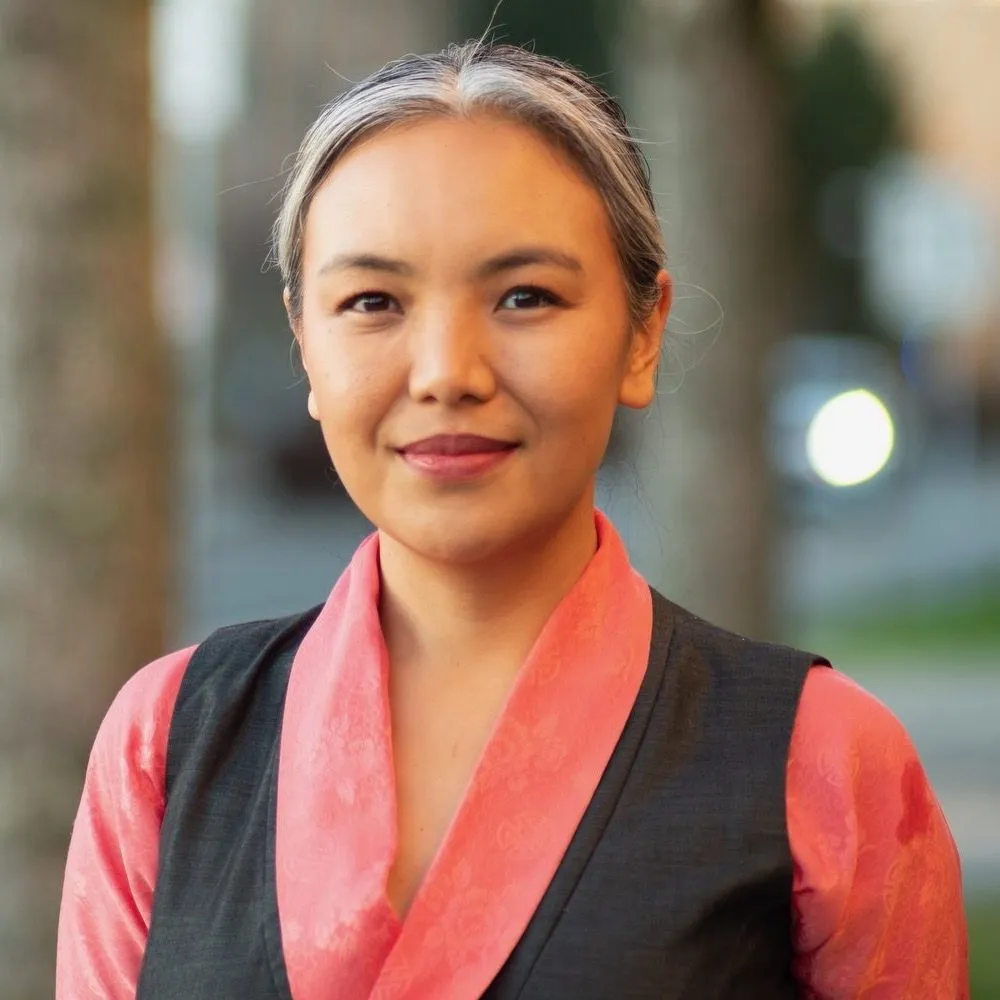
Dr. Pasang Yangjee Sherpa is a Sharwa anthropologist from Pharak, southern part of Mt. Everest region in northeastern Nepal. She is an assistant professor of Lifeways in Indigenous Asia at University of British Columbia. Her research, writing and pedagogy focus on climate change and Indigeneity among Himalayan communities, guided by the question: How do we live in the midst of dying? Her current research applies a community-centered approach to exploring the possibilities of collective survival on a warming planet. She is an assistant professor of Lifeways in Indigenous Asia, jointly appointed in the Institute for Critical Indigenous Studies and the Department of Asian Studies at the University of British Columbia, Canada. In 2024, she received the Mellon New Directions Fellowship to study ‘Sherpa Geomorphology,’ and the SSHRC Insight Development Grant to lead her project, “Living with Climate Change.” She is currently serving on the Scientific Steering Committee for the Intergovernmental Panel on Climate Change (IPCC) workshop on Engaging Diverse Knowledge Systems.
Sanggay Tashi is a PhD candidate in Anthropology at the University of Colorado Boulder. His research examines the uneven encounters between Indigenous communities and expanding state and corporate projects in eastern Tibet, China. He focuses on modernization initiatives, infrastructure development, and emerging renewable energy farms that reshape local communities. His research pays particular attention to licensing regimes, the digitalization of infrastructure and social life, and the development of solar and wind energy farms. Drawing on ethnographic fieldwork, his work explores how Indigenous communities navigate these transformations through culturally grounded knowledge, practices, and skills.
Dr. Eveline Washul is a sociocultural anthropologist and historian of Tibet. She is an assistant professor of anthropology and Tibetan studies in the Central Eurasian Studies Department at Indiana University. Her research focuses on the intersections of place-making, peoplehood, and various forms of state power, examining how these processes shape the contours of social, geographic, and intellectual mobility and boundedness in specific historical and contemporary periods of Tibet. Her forthcoming book, High Lands Pure Earth: Place-Making, History, and Urban Transitions on the Tibetan Plateau (Cornell University Press, spring 2026), demonstrates how the Tibetan experience of rapid urbanization in 21st century China continues to be profoundly shaped by ontologies and senses of being in the world that long pre-date Tibet’s incorporation into the modern Chinese nation-state.
Tenzin Yangkey is a PhD candidate in the Geography Department at the University of Colorado, Boulder. Her dissertation examines the promises and politics of the renewable energy transition in Ladakh, India, with a focus on the development aspirations and political ecologies that shape the Indo-Tibetan borderland. Her work contributes to critical conversations on climate justice, Indigenous governance, and environmental change in the Himalayan region.
Bhutia, Kalzang Dorjee. “Offerings from the Rivers to the Mountains: Mist and Fog as Connecting Life Force in the Sikkimese Himalayas.” In Storying Multipolar Climes of the Himalaya, Andes and Arctic, 121–137. London: Routledge, 2023.
Bhutia, Kalzang Dorjee. “Purifying Multispecies Relations in the Valley of Abundance: The Riwo Sangchö Ritual as Environmental History and Ethics in Sikkim.” MaVCor Journal 5, no. 2 (2021): 1–26.
Caine, Allison. “Herding at the Edges: Climate Change and Animal Restlessness in the Peruvian Andes.” Ethnos 89, no. 5 (2024): 827–847.
Chakraborty, Ritodhi, and Pasang Yangjee Sherpa. “From Climate Adaptation to Climate Justice: Critical Reflections on the IPCC and Himalayan Climate Knowledges.” Climatic Change 167, no. 3 (2021): 49.
Chakraborty, Ritodhi, Mabel D. Gergan, Pasang Y. Sherpa, and Costanza Rampini. “A Plural Climate Studies Framework for the Himalayas.” Current Opinion in Environmental Sustainability 51 (2021): 42–54.
Gurung, Phurwa. “Governing Caterpillar Fungus: Participatory Conservation as State-Making, Territorialization, and Dispossession in Dolpo, Nepal.” Environment and Planning E: Nature and Space 6, no. 3 (2023): 1745–1766.
Ingty, Tenzing. “High Mountain Communities and Climate Change: Adaptation, Traditional Ecological Knowledge, and Institutions.” Climatic Change 145, no. 1 (2017): 41–55.
Mercer, Harriet, and Thomas Simpson. “Imperialism, Colonialism, and Climate Change Science.” Wiley Interdisciplinary Reviews: Climate Change 14, no. 6 (2023): e851.
Nyima, Yonten, and Kelly A. Hopping. “Tibetan Lake Expansion from a Pastoral Perspective: Local Observations and Coping Strategies for a Changing Environment.” Society & Natural Resources 32, no. 9 (2019): 965–982.
Sherpa, Pasang Yangjee. “Ecologics of Care: Sherpa Offering for Collective Survival on a Warming Planet.” Talk given at Columbia University, November 8, 2024.
Sherpa, Pasang Yangjee. “Relevance of the Sixth IPCC Assessment Report to Indigenous Lived Realities.” AlterNative: An International Journal of Indigenous Peoples 21, no. 3 (2025): 463–471.
Stein, S., C. Ahenakew, W. Valley, P. Y. Sherpa, E. Crowson, T. Robin, W. Mendes, and S. Evans. “Toward More Ethical Engagements between Western and Indigenous Sciences.” FACETS 9 (2024): 1–14.
Whyte, Kyle. “Indigenous Climate Change Studies: Indigenizing Futures, Decolonizing the Anthropocene.” English Language Notes 55, no. 1 (2017): 153–162.
Whyte, Kyle Powys. “Indigenous Realism and Climate Change.” In Climate Realism, 69–81. London: Routledge, 2020.
Whyte, Kyle Powys. “Time as Kinship.” In The Cambridge Companion to Environmental Humanities, 39–55. Cambridge: Cambridge University Press, 2021.
Wilder, Benjamin T., Carolyn O'meara, Laurie Monti, and Gary Paul Nabhan. "The importance of indigenous knowledge in curbing the loss of language and biodiversity." BioScience 66, no. 6 (2016): 499-509.
Yeh, Emily T., and Gaerrang. "Pests, keystone species, and hungry ghosts: the Gesar epic and human-pika relations on the Tibetan Plateau." cultural geographies 28, no. 3 (2021): 461-478.
Yeh, Emily T., Leah H. Samberg, Gaerrang, Emily Volkmar, and Richard B. Harris. “Pastoralist Decision-Making on the Tibetan Plateau.” Human Ecology 45, no. 3 (2017): 333–343.
- Zeren, Gongbu, Jing Tan, Qian Zhang, and Bading Qiuying. “Rebuilding Rural Community Cooperative Institutions and Their Role in Herder Adaptation to Climate Change.” Climate Policy 23, no. 4 (2023): 522–537.